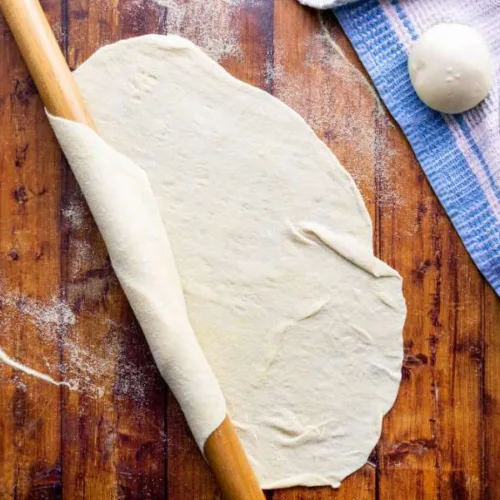
Basic Homemade Phyllo Dough
Dive into the art of making homemade phyllo dough with this detailed guide, designed for bakers of all levels seeking to elevate their culinary creations. Discover how combining simple ingredients like bread flour, olive oil, and a touch of honey can yield the delicate, flaky layers synonymous with classic dishes like baklava and spanakopita. We'll walk you through each step, from mixing and kneading to rolling out the dough to paper-thin perfection, highlighting the crucial role of semolina flour in achieving that non-stick surface for seamless rolling. Whether you're a seasoned baker or new to the kitchen, this guide promises to demystify the process of making phyllo dough from scratch, inviting you to embrace the satisfaction and joy of homemade pastry.
Equipment
- 4 Cups (500g)
Ingredients
- 500 g Bread flour (or 4 cups)
- 10 ml Olive oil (or 2 tsp)
- 25 ml White wine vinegar (or 5 tsp)
- 15 ml Honey (or 1 Tbsp)
- 5 g Salt (or 1 tsp)
- 250 ml Water (or 1 cup) adjust as needed
- Semolina flour or all-purpose flour, for rolling out the dough
Instructions
- In the bowl of a stand mixer fitted with the dough hook attachment, combine the bread flour, olive oil, white wine vinegar, honey, and salt. Start the mixer on a low speed and gradually add the water until the mixture comes together to form a dough. Adjust the water as needed, depending on the flour and environmental conditions. Once the dough has formed, increase the mixer speed to medium and knead for about 5 minutes until the dough is soft, elastic, and slightly tacky but not sticky.
- If you don’t have a stand mixer, combine the ingredients in a large bowl. Once mixed, transfer the dough to a floured surface and knead by hand for about 10 minutes until it reaches the desired consistency.
- Shape the dough into a ball and place it in a clean, lightly oiled bowl. Cover the bowl with a damp cloth or plastic wrap and let the dough rest for 45 minutes. This resting period allows the gluten to relax, making it easier to roll the dough out thinly later.
- After resting, turn the dough out onto a lightly floured surface. Divide it into 8 equal portions. Shape each portion into a small ball.
- Working with one ball at a time, press it down into a flat disk with your hands. Lightly flour your work surface and rolling pin with either semolina or all-purpose flour. Roll out the dough, turning and flipping it frequently, and adding more flour as needed to prevent sticking. Aim to get the dough as thin as possible, ideally so thin that you can see your hand or the countertop through it.
- Once rolled out, the phyllo sheets can be used immediately in your favorite recipes. If layering, brush each sheet lightly with melted butter or oil to prevent them from sticking together and to achieve that characteristic flaky texture when baked.
- Follow the baking instructions for your chosen recipe. Typically, phyllo dough bakes well at a high temperature (between 375°F to 400°F or 190°C to 200°C) until golden brown and crisp.
Notes
- Adjusting Water: The exact amount of water needed can vary. Start with the smaller amount and add more as necessary. The dough should be pliable and smooth but not sticky.
- Storage: If not using the phyllo dough immediately, stack the rolled-out sheets between layers of parchment paper, wrap well in plastic wrap, and refrigerate for a day or freeze for longer storage. Thaw overnight in the refrigerator before using.