
A Moussaka Odyssey: The Tale of Greek Moussaka
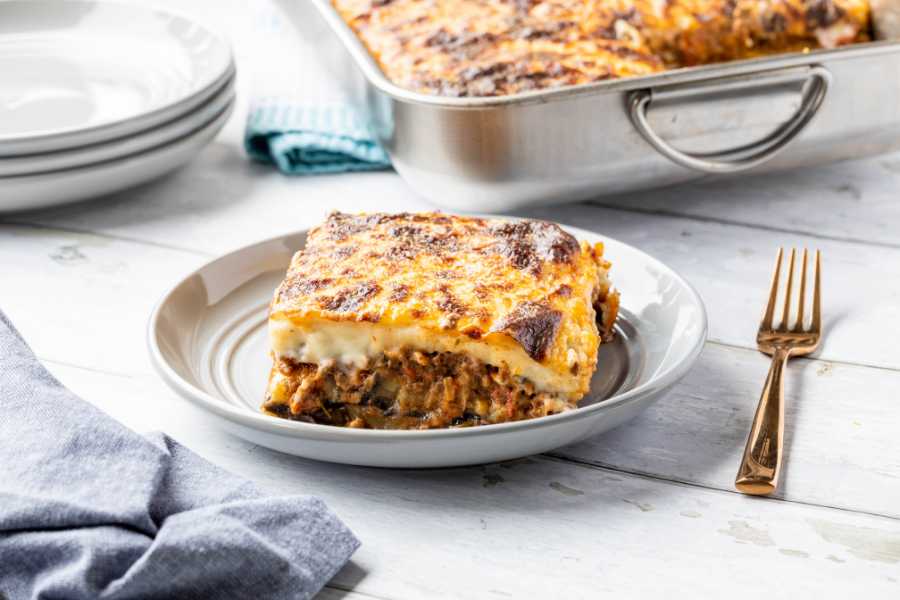
Welcome to the Heart of Greek Cuisine
Imagine sitting at a small, sun-kissed taverna by the Aegean Sea, a gentle breeze carrying the scent of olive groves and the ocean. On the table, among other delights, lies a dish that captures the essence of Greek culinary artistry— moussaka. Greek cuisine, with its rich tapestry of flavors and history, invites us into a world where every meal is a celebration of life. From the humble olive to the robust wines, Greek food is a testament to the country’s love affair with eating well. At the heart of this culinary tradition lies moussaka, a dish that embodies the spirit of Greece—rich, layered, and bursting with flavor.
The Odyssey Begins: The Historical Journey of Moussaka
The story of moussaka is as layered as the dish itself. While today it stands as a pillar of Greek cuisine, its roots stretch back to the Arab world. The original concept of moussaka, which involved layers of vegetables and meat, was brought to the Byzantine Empire and the Balkans through trade and conquest. The Arab influence is evident in the name itself, derived from the Arabic word “musaqqa’a,” meaning “chilled.”
However, the moussaka we know and love today, with its signature layers of eggplant, minced meat, and creamy béchamel sauce, was popularized in the early 20th century by Nikolaos Tselementes. Tselementes, often considered the father of modern Greek cuisine, was a visionary chef who sought to refine Greek cooking by introducing elements of French and European techniques. His version of moussaka, introduced in his 1910 cookbook, was a departure from the traditional olive oil-based dishes of Greek cuisine, incorporating a rich béchamel sauce that added a luxurious creaminess to the dish.
This culinary innovation marked the beginning of moussaka’s journey from a simple peasant dish to a beloved national treasure. Over the years, it has evolved, with variations appearing in different regions of Greece and across the Balkans, each adding their local flavors and ingredients.
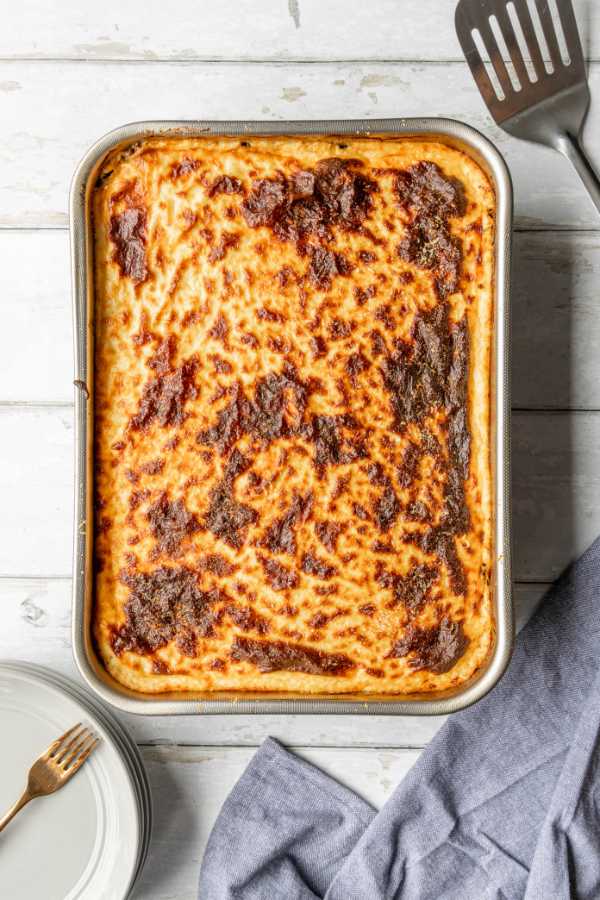
A Symphony of Flavors: The Core Ingredients
The magic of moussaka lies in its ingredients, each layer a melody in the symphony of flavors that is Greek cuisine.
- Eggplant: The soul of moussaka. These purple gems are sliced, salted to remove any bitterness, and then fried or roasted to perfection.
- Potatoes: In many versions, a layer of thinly sliced potatoes forms the base, adding heartiness and depth.
- Minced Meat: Traditionally lamb or beef, seasoned with onions, garlic, and a melody of spices like cinnamon and allspice, cooked in a rich tomato sauce.
- Béchamel Sauce: The crown of the dish. This creamy sauce is made with butter, flour, and milk, thickened to perfection, and often enriched with egg yolks and a sharp cheese like Parmesan.
As we peel back the layers of moussaka’s history, we find a dish that is much more than the sum of its parts. It is a story of culinary migration, innovation, and the love of good food that binds us all.
The Core Ingredients: A Closer Look
Every ingredient in moussaka is a testament to the simplicity and depth of flavors that define Greek cooking. Here’s a closer examination:
- Eggplant: The quintessential vegetable of the Mediterranean, eggplant brings a meaty texture and a unique, slightly smoky flavor to the dish. Its versatility allows it to absorb the rich tomato and meat sauces, becoming the heart of moussaka.
- Potatoes: The inclusion of potatoes adds a comforting, earthy base to the dish. When cooked, they offer a soft, yielding contrast to the more structured layers of eggplant and meat.
- Minced Meat: The choice of meat varies by region and personal preference. Lamb offers a traditional, robust flavor, while beef provides a milder base. The meat is sautéed with onions and garlic, simmered in a tomato sauce enriched with a harmony of spices like cinnamon, allspice, and sometimes nutmeg, creating a fragrant, savory layer.
- Béchamel Sauce: This creamy sauce is the final flourish on the moussaka, enveloping the layers beneath in a rich, velvety blanket. Seasoned with nutmeg and often enriched with egg yolks and cheese, it bakes to a golden, bubbling crust that is irresistible.
Variations on a Classic
Moussaka is a dish that invites creativity. Across Greece and in kitchens worldwide, cooks have embraced the structure of moussaka as a canvas for their culinary expressions.
- Vegetarian Moussaka: By replacing the meat layer with a rich concoction of lentils, mushrooms, or a medley of grilled vegetables, the dish becomes a hearty vegetarian delight.
- Seafood Moussaka: In coastal regions, it’s not uncommon to find variations that incorporate fish or shrimp, layered with creamy sauces and greens.
- Dairy-Free and Vegan Moussaka: Innovations include using coconut milk or cashew-based béchamel and plant-based ground meat substitutes, making the dish accessible to those following dairy-free or vegan diets.
- Regional Twists: From the addition of artichokes in some Aegean islands to the use of zucchini or sweet potatoes, regional variations reflect the local produce and culinary traditions.
Moussaka: A Social and Cultural Pillar
In Greece, moussaka is more than just a meal; it’s a social event. Preparing and enjoying moussaka is often a communal activity, a reason to gather family and friends around the table. The process of layering the ingredients is a labor of love, reflective of the care and warmth that Greek hospitality embodies.
Moussaka is also a dish that tells stories—of seasons and harvests, of local customs and family traditions, and of the global journeys that have influenced Greek cuisine. It’s a dish that has traveled through time, evolving with each generation while retaining its essence.
Creating a Greek Feast: Pairings for Moussaka
Moussaka, with its rich flavors, pairs beautifully with a variety of Greek dishes and wines for a complete feast:
- Appetizers: Start with a selection of mezze such as tzatziki, a yogurt and cucumber dip; dolmades, rice-stuffed grape leaves; and spanakopita, spinach and feta phyllo pastries.
- Salads: A crisp Greek salad, with ripe tomatoes, cucumbers, red onion, olives, and feta cheese, dressed in olive oil and lemon, offers a refreshing contrast to the richness of moussaka.
- Breads: Serve warm, crusty bread or pita to soak up the sauces and flavors of the meal.
- Wines: A robust red wine, like a Greek Agiorgitiko or Xinomavro, complements the savory layers of the moussaka. For a lighter pairing, try a crisp, dry white wine such as Assyrtiko.
Remember, the key to a successful Greek feast lies not only in the food but in the joy of sharing it with friends and family. Enjoy the process of cooking, the pleasure of eating, and the warmth of companionship.
Conclusion: The Enduring Legacy of Moussaka
As we come to the end of our culinary odyssey, it’s clear that moussaka is much more than a sumptuous dish—it’s a cultural icon, a symbol of Greek heritage and the communal joy of cooking and eating. Whether you’re a seasoned chef or a curious food lover, making moussaka is an invitation to partake in this rich tradition, to experiment with flavors and ingredients, and to create your own version of this beloved classic.
In the spirit of Greek hospitality, we invite you to roll up your sleeves, gather your loved ones, and share in the making and enjoying of a dish that captures the heart of Greek cuisine. Let the layers of moussaka be a reminder of the layers of history, culture, and friendship that food can embody. Kali orexi—bon appétit!
Greek Moussaka
Ingredients
For the Eggplant Layer
- 1 medium eggplants, sliced into 1/2 inch rounds
- Olive oil for brushing
- Salt to draw out bitterness
For the Potato Layer
- 4 medium potatoes, peeled and sliced into 1/4 inch rounds
For the Meat Sauce
- 2 Tbsp Olive oil
- 1 large onion, finely chopped
- 3 Cloves of garlic, minced
- 1 Lb Ground lamb or beef
- 1 Can (14oz) Crushed tomatoes
- 1 tsp Ground cinnamon
- 1/2 Tsp Allspice
- Salt and pepper to taste
- Fresh parsley, chopped (optional for garnish)
For the Béchamel Sauce:
- 1/4 Cup Butter
- 1/4 Cup All-purpose flour
- 2 Cups Milk
- A pinch of nutmeg
- 2 Egg yolks, beaten
- 1/2 Cup Grated Parmesan cheese
- Salt and pepper to taste
Instructions
- Preheat your oven to 375°F (190°C). Prepare the vegetables and meat sauce in advance.
- Eggplant: Salt the eggplant slices and let them sit for about 30 minutes to draw out bitterness. Rinse and pat dry before cooking. Arrange the eggplant slices on baking sheets, brush both sides with olive oil, and season with salt. Bake for 20-25 minutes until soft and lightly browned.
- Potatoes: Boil the potato slices until just tender, about 5-7 minutes. Drain and set aside.
- Meat Sauce: In a large pan, heat olive oil over medium heat. Sauté onion and garlic until translucent. Add the ground meat, breaking it up with a spoon, and cook until browned. Stir in the crushed tomatoes, cinnamon, allspice, salt, and pepper. Simmer for about 20 minutes until thickened. Set aside.
- Béchamel Sauce: Melt butter in a saucepan over medium heat. Stir in flour to form a roux, cooking for 1-2 minutes without browning. Gradually whisk in warm milk until the sauce is smooth and thickened. Remove from heat, and slowly whisk in egg yolks and Parmesan. Season with nutmeg, salt, and pepper.
- Assemble the Moussaka: In a large baking dish, layer potatoes, eggplant, and meat sauce. Repeat the layers until all ingredients are used, finishing with a layer of eggplant. Pour the béchamel sauce over the top, spreading evenly.
- Bake for about 45 minutes, or until the béchamel is golden and the moussaka is bubbling. Let it rest for 10 minutes before serving.